Reduce your inappropriate hospital and care home admissions
The Nuffield Trust report at least 1 in 5 hospital admissions are avoidable, and at any moment, around 20% of people in emergency departments don’t need to be there. These are patients who needed their GP, 111 call handler, or paramedic to know the right community alternatives, or for their ED doctor to be aware of services in that patient's area instead of defaulting to admission.
Too many patients are caught in a frustrating loop, bounced from service to service, referred incorrectly, or left waiting without clarity. This fragmented experience erodes trust: 38% of the public say the NHS is poor at keeping people informed about their care. Poor communication and misdirected referrals are among the top drivers of formal complaints, and they carry a financial cost too. NHS provider deficits have surged, with overspends reaching £1.2 billion in 2023/24, a sign that inefficiencies, including duplicated appointments and avoidable delays, are draining resources. When navigation fails, patients suffer and the system pays.
Over the longer term, we know helping people to keep active, eat well and be socially connected delays frailty, while new services increasingly help people live independently for longer. This is only achievable if health and care professionals know how to access these services. Integrated Neighbourhood Teams are coming, aimed at providing care closer to home by teams that know residents well; This is better for patients but creates even more complexity in the service landscape for clinicians.
The Health and Care Expert analytics enable more efficient commissioning and service configuration, unlocking millions of pounds in duplication and efficiency.
2025 Health Foundation report identified clinician decision support tools provided one of the highest ROI of all technology investments for releasing staff time
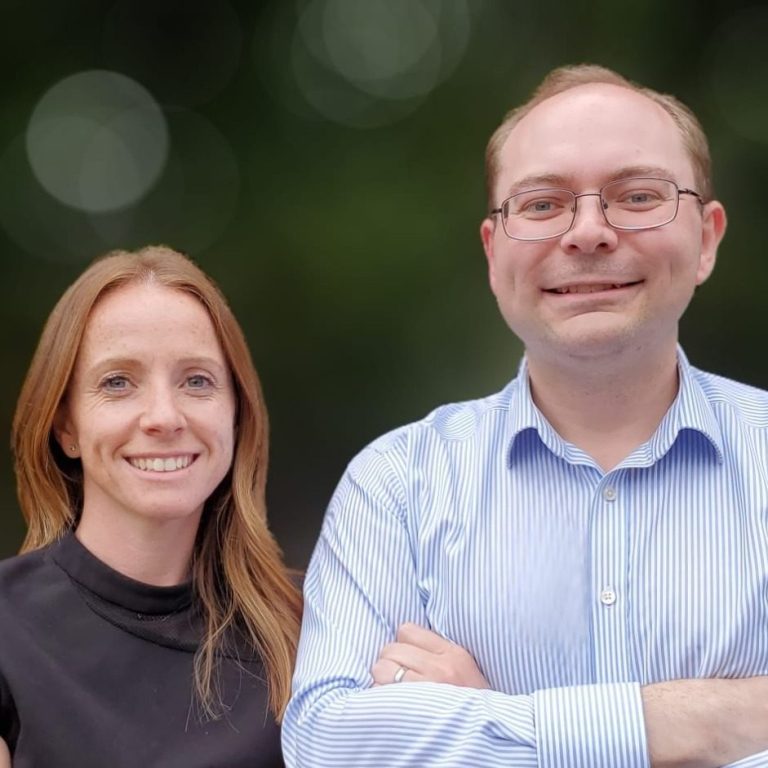
An Interview with Founders Jodie Adkin
and Elliott Ward
What sparked the idea of the Health and Care Expert?
Jodie: It really came from years of frustration. Both Elliott and I have worked
across the NHS for many years and no matter where we were we kept seeing the
same problem: clinicians wasting time trying to find the right services for patients or
patients in the wrong place because the clinician looking after them had no idea a
more suitable alternative exists.
Elliott: Exactly. We saw patients stuck in hospital beds not because they needed to be there, but because no one could easily find an alternative or even knew one existed. That delay in discharge isn’t just inefficient, it’s harmful. It means increased risk of hospital acquired infection, deconditioning and worse health outcomes. This problem fitted perfectly into what we learnt at our AI in Healthcare course at Harvard Medical School, which suggest if the problem is too complex, or it isn’t valuable to use human capacity, get the computers to assist.
So you decided to build a solution: what makes The Health and Care Expert different?
Jodie: We wanted to flip the script. Instead of clinicians navigating clunky databases, we built an AI-powered solution that understands natural language. You ask it a question e.g. “What’s available for a diabetic patient in Lewisham?”, and it gives you the answer, instantly. It’s fast, intuitive, and always up to date. It is exactly the type of innovation NHS Digital are encouraging and clinicians are screaming out for.
Elliott: And it’s not just about speed. It’s about impact. The Health Foundation found that even a 1–2% improvement in prevention could save the NHS £1–2 billion annually. The Health and Care Expert help's clinicians, in hospitals and the community, direct patients earlier to community, social care, and preventative services or access diagnostics and specialty opinion, fast. That’s where real change happens.
What were some of the biggest challenges you faced in building The Health and Care Expert?
Jodie: Honestly, the scale of the problem. Service directories aren’t just inefficient, they are overly manual and, quite frankly, unusable. So we had to build a full end-to-end solution – an automated service directory that is constantly updating and a well-trained, continually learning AI agent that can match patient context, service criteria, and all other nuances that impact on decision making around identifying the right service for patients.
Elliott: We knew the tech had to be smart, but also deeply human-centric. With hundreds of health, care and third sector services in every area of the country, we had to build something that could work across urgent care, mental health, primary care, etc, that is as usable to a community pharmacists as it is to a junior doctor doing their first shift in an A&E Department.
What’s next for The Health and Care Expert?
Jodie: We’re looking to launch and expand rapidly. The platform is already showing how it will save clinicians hours and hours of time per week and improve referral quality. The feedback from clinicians so far has been excellent. For every area that holds our tool we will also be able to unlock new analytics for commissioners, helping them allocate resources more efficiently and plan proactively.
Elliott: Ultimately, we want to reshape how the NHS navigates care. This strongly supports NHS England's priorities laid out in the NHS 10 Year Plan: from analogue to digital, from sickness to prevention. We believe smarter service navigation can transform inefficiencies into better outcomes for patients, professionals, and the system as a whole.
One final question: what keeps you going?
Jodie: Knowing that every time a clinician finds the right service faster, a patient gets better care and that clinician is enabled to do their job. That’s what drives us.
Elliott: And knowing that we’re not just building tech, we’re building trust, efficiency, and a more sustainable NHS.